
Symptoms of Diabetes: Early Signs You Should Never Ignore :
Introduction –
Diabetes is one of the most common health conditions affecting millions of people around the world. It happens when your body cannot properly control blood sugar (glucose) levels.
If not managed early, diabetes can cause serious health problems such as heart disease, kidney damage, nerve pain, and vision loss.
Understanding the early symptoms of diabetes is the first step to protecting your health.
What is Diabetes?
Diabetes occurs when your body:
-
Does not produce enough insulin, or
-
Cannot effectively use the insulin it produces
Insulin is a hormone that helps your body convert sugar (glucose) from food into energy.
When insulin doesn’t work properly, sugar builds up in the blood, leading to high blood glucose levels — a condition known as hyperglycemia.
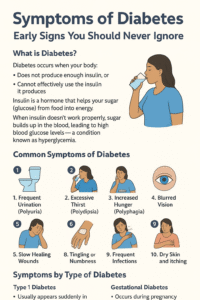
Common Symptoms of Diabetes
Below are the early warning signs and symptoms you should be aware of:
1. Frequent Urination (Polyuria)
People with diabetes often feel the need to urinate more frequently, especially at night.
This happens because the body tries to remove extra sugar through urine.
2. Excessive Thirst (Polydipsia)
Frequent urination can make you lose fluids, causing dehydration.
As a result, you may feel thirsty all the time, even after drinking enough water.
3. Increased Hunger (Polyphagia)
When your body can’t use sugar for energy, it sends signals to eat more.
This leads to constant hunger and cravings, even after a full meal.
4. Sudden Weight Loss
If your body can’t get energy from sugar, it starts breaking down fat and muscle instead.
This causes unexpected weight loss, even if you’re eating normally or more than usual.
5. Fatigue and Weakness
When cells don’t get enough glucose, the body runs low on energy.
You may feel tired, weak, or sleepy most of the time.
6. Blurred Vision
High blood sugar can cause swelling in the lens of your eyes, making it difficult to focus.
This may cause temporary blurred vision that improves when sugar levels are controlled.
7. Slow-Healing Wounds
Cuts, bruises, or skin infections take longer to heal in people with diabetes.
Poor blood flow and nerve damage make it harder for the body to repair itself.
8. Tingling or Numbness in Hands and Feet
Nerve damage (known as diabetic neuropathy) can cause a tingling, burning, or numb feeling — often starting in the toes and fingers.
9. Frequent Infections
High sugar levels can weaken the immune system and increase the risk of:
-
Skin infections
-
Gum infections
-
Urinary tract infections (UTIs)
-
Yeast infections
10. Dry Skin and Itching
Dehydration and poor circulation may cause dry, cracked, and itchy skin, especially on the legs and feet.
Type 1 Diabetes
Usually appears suddenly in children or young adults.
Key symptoms include:
-
Rapid weight loss
-
Extreme thirst and hunger
-
Fatigue
-
Fruity smell on breath (due to ketones)
-
Nausea or vomiting
Type 1 diabetes requires immediate medical attention.
Type 2 Diabetes
Develops slowly, mostly in adults.
Key symptoms include:
-
Increased thirst and urination
-
Blurred vision
-
Frequent infections
-
Dark patches of skin around the neck or armpits (Acanthosis Nigricans)
Type 2 diabetes can be managed through lifestyle changes, medication, and regular monitoring.
Gestational Diabetes
Occurs during pregnancy due to hormonal changes.
Usually has no visible symptoms but may cause:
-
Fatigue
-
Frequent urination
-
Excessive thirst
It’s detected during routine prenatal checkups and should be monitored to protect both mother and baby.
When to See a Doctor
Visit a doctor immediately if you notice:
-
Constant thirst or hunger
-
Unusual tiredness or weight loss
-
Blurred vision or tingling sensations
-
Slow-healing cuts or frequent infections
A simple blood sugar test or HbA1c test can confirm if you have diabetes or are at risk.
Conclusion
Diabetes can be managed effectively with early detection, healthy eating, regular exercise, and proper medication.
If you notice any of the above symptoms of diabetes, don’t ignore them — early action can save your health and prevent long-term complications.