Irritable Bowel Syndrome (IBS) is a chronic digestive disorder that affects the large intestine (colon).
It is one of the most common gastrointestinal conditions globally, impacting nearly 10–15% of adults.
IBS does not cause permanent damage to the intestines, but it can lead to significant discomfort and affect daily life.
It is often referred to as a functional gastrointestinal disorder, meaning that the structure of the digestive system appears normal, but the way it works is not.
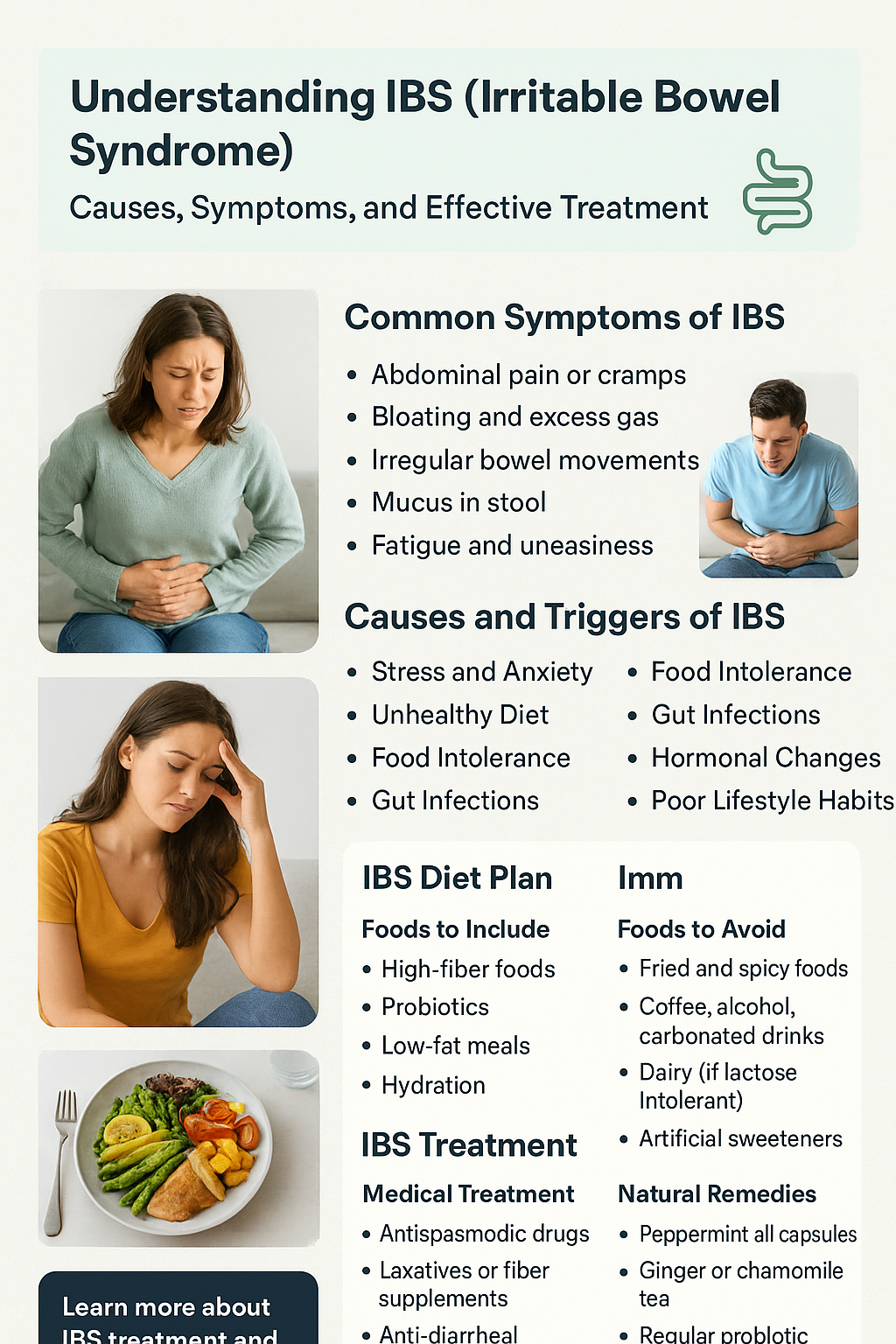
💡 Causes and Triggers of IBS
The exact cause of IBS is still not fully understood, but experts believe it results from a combination of gut sensitivity, brain-gut communication issues, and environmental factors.
Here are the most common triggers and contributing causes:
-
Stress and Anxiety
Emotional stress directly impacts the digestive system through the gut-brain connection, leading to spasms or irregular movements in the intestines. -
Unhealthy Diet
Eating spicy, oily, or high-fat foods, caffeine, alcohol, and processed items can irritate the digestive tract. -
Food Intolerance
Certain foods like dairy, gluten, and artificial sweeteners may worsen IBS symptoms. -
Gut Infections
A history of severe food poisoning or bacterial infection can lead to post-infectious IBS. -
Hormonal Changes
Women often experience IBS flare-ups during menstruation due to hormonal imbalance. -
Poor Lifestyle Habits
Irregular eating times, lack of sleep, and low physical activity can all contribute to poor digestion.